Archive 2016
________________________________
#26 - Winter 2016
Dear Friends and Guests
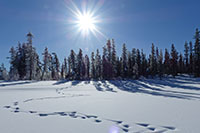
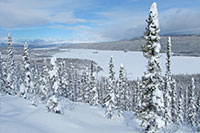
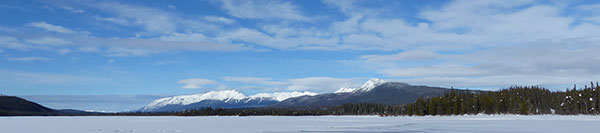
Winter silence – winter calm – winter sleep. In winter it's incredibly
quiet at Frances Lake. Only few sounds can be heard in the
snowy,
wintry landscape. The most common natural noise is a faint whisper of
wind rushing in the trees. But there are our own sounds and noises when
we move along: the snow crunching underfoot, the snowshoes flopping on
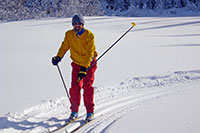
powder snow or the rhythmic swish of our cross-country skis. Also in
the animal world it's much calmer during the cold and dark winter
season.
Many animals have an energy-saving winter rest or even a true winter
sleep. The majority of birds use their ability to fly and move south or
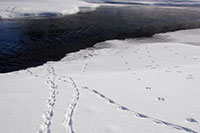
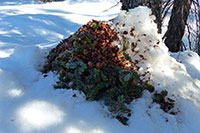
to the coast in fall. However, we see many signs of the remaining
animals on the snow like their tracks, feeding sites or droppings.
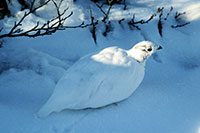
Often we cross tracks of moose, wolves, snowshoe hares, martens,
squirrels and ptarmigans.
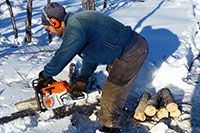
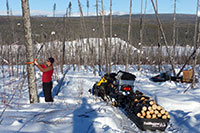
Despite winter calm, we also have our active phases. This year we dealt
with long pending work on our winter trail.
Equipped with chain saw,
pruner and shovel we cleared dead wood out of the way, cut bushes and
straightened the trail. Due to these improvements our trail became
shorter and much easier to use. And besides we got plenty of great
firewood. In fact, cutting firewood is
another arduous and
time-consuming winter
job, as we need large quantities to get us
through the winter and have warm and cozy cabins ready for our guests.
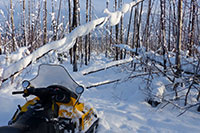  
This year's winter in the Yukon was much warmer than average.
We never
got any cold spells below -35°C. With about half a metre, the snowpack
at Frances Lake was rather shallow and very loose, which made it
strenuous for walking around on snowshoes. And on the lake widespread
overflow conditions persisted for weeks, limiting our activities there.
Overflow is a treacherous phenomenon out here, if water swells up
through tension cracks in the lake ice, producing slush pockets
underneath the insulating snow cover which are often invisible from
above. Although the lake ice is more than safe (about 80 cm thick), the
slushy overflow layer above it (up to 50 cm deep) can soak your boots
or easily sink your snowmobile. And then you have to act fast, as once
exposed to the cold surface temperatures the slushy water will freeze
within minutes. But on the other hand, the extensive overflow made for
an easy drinking water supply all winter and we never had to dig more
than a few seconds to obtain liquid water...
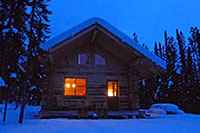
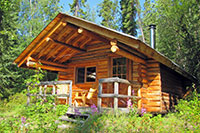
One weekend we went on "holidays around the corner". To be
precise, we
stayed a few nights in our self-built log cabin on the other
side of
the peninsula which now serves as a self-contained guest
cabin.
Intense memories of the laborious construction time came to mind, but
now we could enjoy the pleasures of actually using it. And after our
own personal winter test we can truly say: it's a lovely, cozy and very
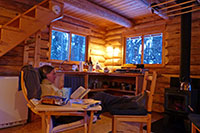
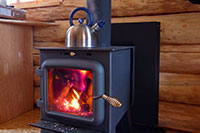
functional cabin. Is there anything nicer than relaxing after a rich
winter's day in front of the crackling wood stove, watching out of the
window by candle light as the night falls and snow starts falling
silently. By the way, for coming summer we still have plenty of
vacancies in our self-contained rental cabin.
Indeed, the coming summer season is approaching
fast. For full-service
lodge stay
we still have vacancies in late June, from
August 8 – 14 and
from August 26 until September 20 (end of season). Also our Yusezyu
River canoe trip, as part of the Wild
Yukon-Program,
is not fully
booked yet and we're particularly looking for a single person or a
group of three to fill up canoes with an even number of paddlers.
Therefore we offer this year's Yusezyu River canoe trip for a
single
person without single occupancy surcharge, or 10%
discount for a group
of three!
Kind regards, and see you soon...
Andrea & Martin Laternser
________________________________
#27 - July 2016
Dear Friends and Guests
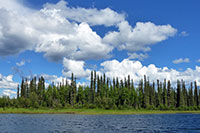
By now summer is in full swing. The predominantly
sunny and comfortably
warm weather (up to 30°C) is perfect for vacationers from around the
world to enjoy their wilderness holidays with us at Frances Lake. The
friendly atmosphere and delicious food, soothing peace and plenty of
time for relaxation, sightseeing trips by boat on the strikingly
beautiful lake or active exploration by canoe and on foot in midst of
pristine wilderness. Already in the beginning of July the first guests
(kids) were floundering about in the still chilly water at 16°C. By
mid-July (18°C) the first adults dared to go for a swim, too.
After an extremely mild winter nature awakened about 3 weeks
earlier
from hibernation than normal. The snow was mostly gone by mid-April.
The ice on the lake was out by May 6th. In mid-May the poplar leaves
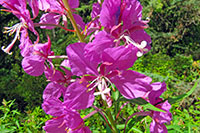
were sprouting and soon later the first flowers were blooming. A pair
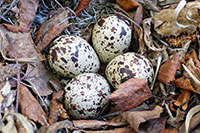
of sandpipers was nesting only two metres in front of the lodge porch
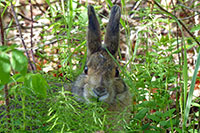
and the snowshoe hares had numerous offspring. It’s blooming, flitting,
sprouting and tweeting around our lodge. Nature literally explodes and
enjoys the short, intensive Nordic summer to the fullest.
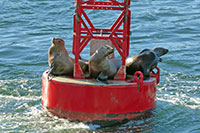
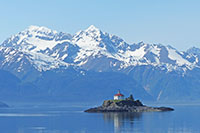
This spring we were traveling for a few weeks down south on Vancouver
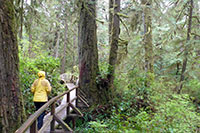
Island and along the B.C. and Alaska coast. We enjoyed the very nice
scenery with plenty of forests and (for us Yukoners) excitingly large
trees. On foot, by canoe and on many ferry passages we explored the
wild coastline and dived into the lush rainforest. But our joy and
excitement was frequently marred and we were profoundly alarmed and
shocked by the massive extent of logging. About
half the area of all temperate rainforests on Earth
grows along the Pacific coast of Alaska
– British Columbia – Washington – Oregon down to northern California.
These forests are the largest biomass producers of our planet. But 90% of their original extent has been logged
over the past 150 years. It is
true that forest regrows, but it takes at least 1000 years for a fully
functional rainforest ecosystem to be back in place. The large forest
areas on Earth (temperate and tropical rainforests,
as well as the
boreal forests of Russia and Canada) are crucial for the
survival of
mankind and our planet’s ecosystem, for they are directly and
indirectly responsible for the production of oxygen, clean drinking
water, food production and a sustainable global climate.
 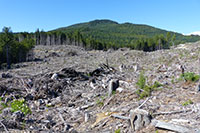 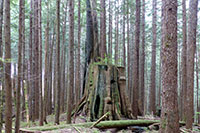
Our journey down south made us very reflective about the exploitation
of our natural resources like forests, soil, water, air, fossil fuels
and minerals by the rapidly growing world population. Rethinking (and
acting!) is essential. A first step to achieve this is the recognition
of the problem. The view out of the window during a flight from
Vancouver to Whitehorse along the Pacific coast in fine weather will
reveal a first impression of the many and large clear-cut areas. A more
pleasant and very scenic alternative is taking the ferry from
Vancouver/Seattle along the Inside Passage to
Skagway (Alaska) and
connecting by railway and bus to Whitehorse. Especially in early summer
(May/June) we can highly recommend this routing, as the coastal
mountains are still nicely snow covered and it’s not so touristy yet...
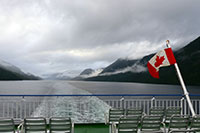  
Finally, in our ecologically coloured newsletter we would also like to
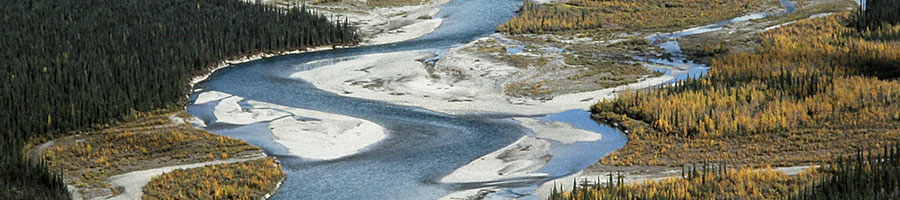
point out to a home-made Yukon issue. Since many years there’s an open
conflict between the public and the Yukon Government about the land
use planning process for the Peel River watershed in the
northeast of the
territory. The government would like to open 70% of the largely
pristine wilderness area (68,000 km2 or 15% of
the entire territory) to
industrial development, including mining and fossil fuel extraction. An
overwhelming majority of the population would like to have this area of
outstanding beauty, homeland to four First Nations and one of the
largest unspoilt natural areas in North America protected. Two court
decisions are already in favour of those supporting protection and next
year the case will be heard by the Supreme Court of Canada, the highest
court in the country. At Protect
The Peel you’ll
find detailed information about the case and we like to invite you to
take action now, sign the Peel Pledge and show your support for one of
today’s most important nature conservation issues of Canada. Also
voices from other countries and from overseas are important. Thank you
very much!
With kind regards,
Andrea & Martin Laternser
________________________________
#28 - Review 2016
Dear Friends and Guests
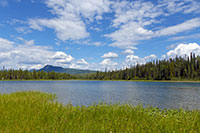
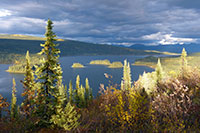
2016 was characterized by a very early and warm spring and
summer.
After the mild winter the ice on Frances Lake was out three weeks
earlier than usual. Accordingly, the vegetation sprouted earlier and
the pleasant summer weather had a strong impact on the growing cycle:
flowers, berries and fruits, as well as fall colours – everything came
a few weeks earlier than normal. Also mosquitoes weren’t much of an
issue this year and soon disappeared again. The early spring and the
nice, pleasant summer were a real treat.
«But I don’t wanna leave from here!»
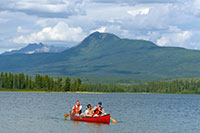
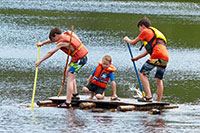
These were the plain words of 8-year-old Wilko from Toronto at the end
of the vacation at our lodge. During the past season several
families
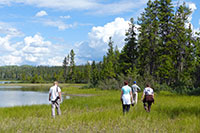
spent their holidays with us in the Yukon wilderness. Many children and
teenagers enjoyed the unique experience and the unlimited freedom which
nature offers out here and they could easily entertain themselves, even
without a smartphone. And of course also their parents could benefit
from having more time for themselves. Thus, all our guests experienced
their own magical moments, be it while building a raft, going for a
sunset stroll around the lodge, on an adventurous canoe trip, watching
animals or losing track of time while angling. The joy is well
reflected
by various guest book entries and emails:
«Notre séjour à Frances Lake restera
la plus belle étape de notre voyage et c'est
grâce à vous que l'envie
de revenir est déjà dans nos projets.»
(Annick & Laurent)
«These were incredibly beautiful,
interesting, diversified, relaxing and informative vacations which we
can highly recommend to anyone!»
(Monika & Stefan)
  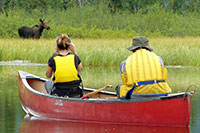
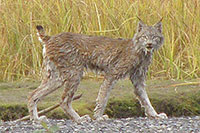
One day, on a balmy summer evening, we received an exclusive visit. In
the last beam of sunlight a magnificent lynx came
strolling along the
shoreline towards our lodge. After thoroughly scanning our place – and
growing suspicious of all the observers, boats and cabins around –
eventually it disappeared in the bush, becoming instantly invisible. On
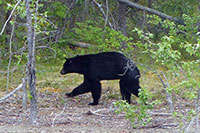
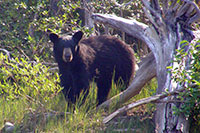
other occasions, twice we had black bears swimming
across the bay in
front of the lodge, very determined but apparently undeterred by our
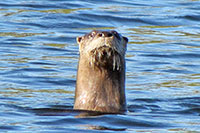
lodge operation. Also, memorable events were the cheeky river
otters
patrolling the shallow waters near the lodge chasing small fish around
our boats.
Before and after our summer guest season, as usual we carried out
various pending renewal and renovation works.
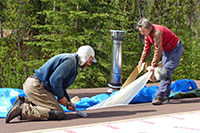
Notably replacing the
roof of the main lodge will be well remembered. Transporting and
working with the heavy roofing material was physically exhausting and
because of the changeable weather and the fast approaching guest season
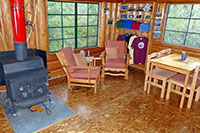
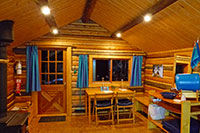
we were pressed for time. Immediately noticeable for guests is the new
floor in the main lodge and the newly installed lighting in the guest
cabins. Thanks to new 12 volt LED lamps and solar-powered batteries our
guests will now enjoy a warm, soft light in their log cabins. The first
users this fall appreciated this moderate technical upgrade and the
achieved additional comfort very much.
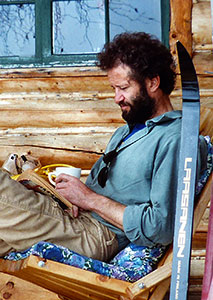 It is
with much sadness that we have to announce the passing away of Ed
Festel, the founder of Frances Lake Wilderness Lodge. On
August 25,
2016, aged 64, he died of multiple myeloma. Originally from
Berne (Switzerland), Ed lived an adventurous career leading fellow
outdoors folks through the mountains of Europe, Asia and the Americas.
In 1985 he immigrated to Canada and settled in his beloved Yukon
Territory where he founded Frances Lake Wilderness Lodge and Nature
Tours of Yukon. Later he operated the River View Hotel in Whitehorse
and served on the board of the Tourism Association of the Yukon. Beside
tourism, aviation was a large part of Ed’s life and he was an excellent
aviator. When he finally retired to Penticton (B.C.) in 2010 he became
a stalwart member of the Penticton Flying Club. Ed had an awesome
ability to organize and motivate and we are very grateful for his
pioneering endeavours for wilderness tourism in general, and for the
establishment of Frances Lake Wilderness Lodge in particular. Without
him, this magnificent place would likely not exist. It is
with much sadness that we have to announce the passing away of Ed
Festel, the founder of Frances Lake Wilderness Lodge. On
August 25,
2016, aged 64, he died of multiple myeloma. Originally from
Berne (Switzerland), Ed lived an adventurous career leading fellow
outdoors folks through the mountains of Europe, Asia and the Americas.
In 1985 he immigrated to Canada and settled in his beloved Yukon
Territory where he founded Frances Lake Wilderness Lodge and Nature
Tours of Yukon. Later he operated the River View Hotel in Whitehorse
and served on the board of the Tourism Association of the Yukon. Beside
tourism, aviation was a large part of Ed’s life and he was an excellent
aviator. When he finally retired to Penticton (B.C.) in 2010 he became
a stalwart member of the Penticton Flying Club. Ed had an awesome
ability to organize and motivate and we are very grateful for his
pioneering endeavours for wilderness tourism in general, and for the
establishment of Frances Lake Wilderness Lodge in particular. Without
him, this magnificent place would likely not exist.
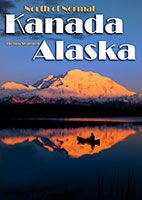 During
winter 2016/17 famous photographer Thomas Sbampato
will be touring
Germany, Austria and Switzerland with his latest slide
show «Kanada
Alaska – North of Normal». Last year Sbampato was
visiting our lodge
and his awesome imagery and video cuts from Frances Lake can now be
seen in his impressive "best of show" on large screen. On all
shows in
Switzerland in January 2017 we’ll be personally present and look
forward to meet familiar and new Canada fans. The current show list is
available here. During
winter 2016/17 famous photographer Thomas Sbampato
will be touring
Germany, Austria and Switzerland with his latest slide
show «Kanada
Alaska – North of Normal». Last year Sbampato was
visiting our lodge
and his awesome imagery and video cuts from Frances Lake can now be
seen in his impressive "best of show" on large screen. On all
shows in
Switzerland in January 2017 we’ll be personally present and look
forward to meet familiar and new Canada fans. The current show list is
available here.
As usual, in late January we’ll also present our lodge at the Swiss
travel trade show FESPO in Zurich. Already now our full lodge
and tour
program 2017 is online. Next season – our tenth – is already
well
booked. So if you’re interested in coming, please contact us early to
avoid disappointment.
Kind regards and have a nice winter,
Andrea & Martin Laternser
Top of Page
|